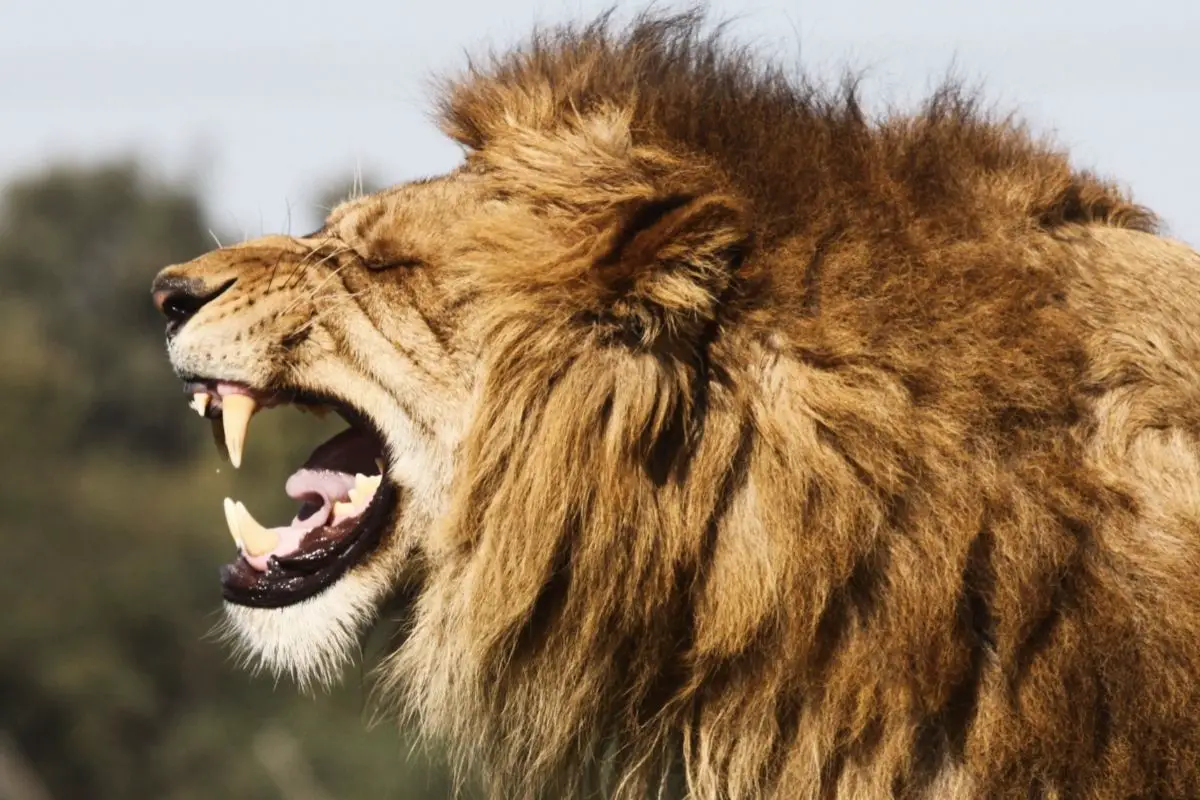
When it comes to the savanna, one of the animals we are mostly intrigued about is the lion. In Africa, it has been noted as being the King of the Jungle, despite the mammal not even living in jungle terrain.
This is due to the fact the lion is at the top of the food chain. They are a feared creature, one that is an expert at hunting which it passes down to its cubs.
They are extremely powerful, and a type of predator which causes both fear and interest with humans.
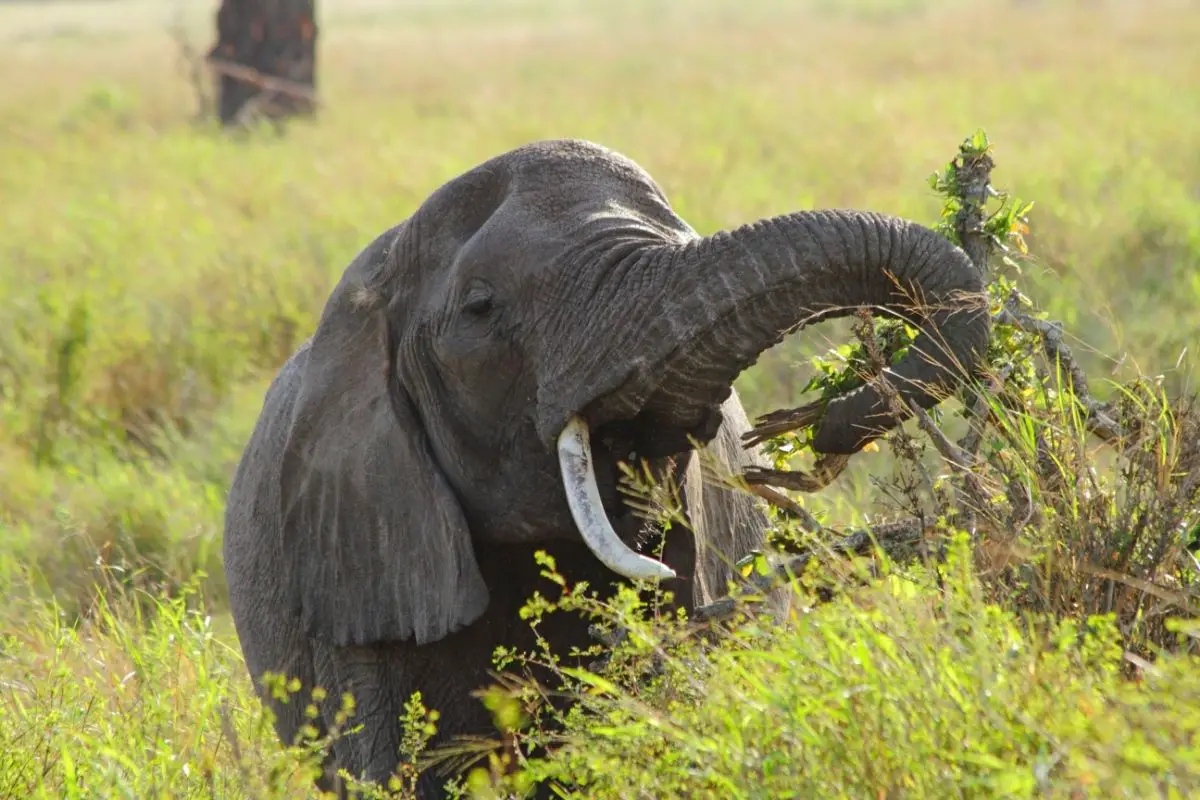
Because the lion has so much prey to choose from, you might be wondering if they will eat something as large as an elephant. It measures up to ten feet in height, with a possible weight of 14,000 pounds. That’s a lot of dinners sorted!
In this article we shall take a look at the answer. So, let’s get to it!
Does A Lion Eat An Elephant?
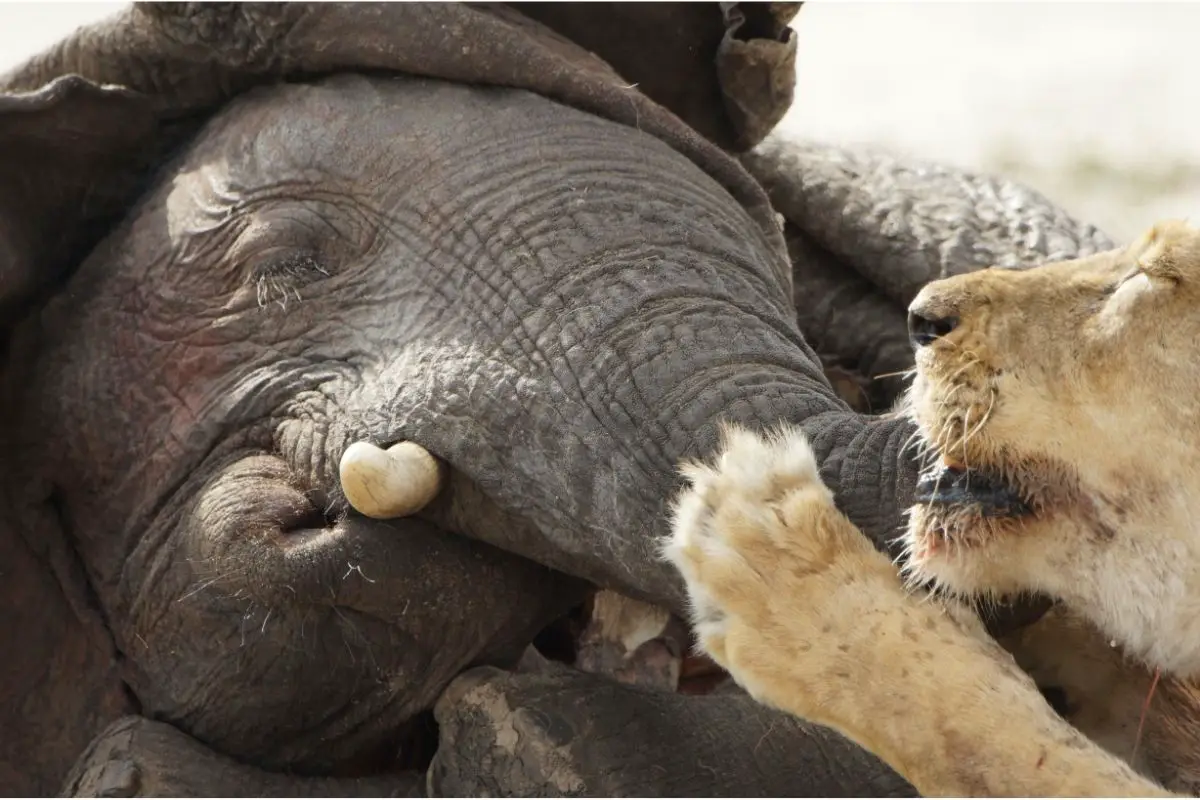
Whilst the majority of the time a lion wouldn’t eat an elephant, there are circumstances where a lion may just choose an elephant as their next meal.
So, why would a lion actually eat an elephant? When they are desperate. Just like most animals, when times become difficult such as they are low on food and are starving, they may seek other things to eat that they normally wouldn’t.
It is really rare for a lion to seek out an elephant to hunt, but if there is an extreme shortage of food, they may prey on elephants, even though they are much, much bigger than themselves.
For the lion, this could result in death. If they are lucky, they may kill the lion and have a meal. If they are unlucky, they will get killed by the elephant. Another thing is that if the elephant manages to escape, the lion will be exhausted and starved of energy.
Because lions need a lot of rest in order to have energy to hunt, this means they will need to sleep to gain energy, and be hungry.
Having said that, it is a lot more common for a lion to seek out elephant calves who may be unattended. They are much slower and a lot smaller, making them an easier target.
However, elephants who spot that the calf is under attack will form a circle around the calf and make sure the lion, or other predator, cannot reach them.
Are Lions Able To Kill An Elephant?
Not surprisingly, a lone lion would struggle to kill an elephant. It makes sense then that two lions, both male, would attack a huge elephant. Even so, it still isn’t very common to do so.
It isn’t unheard of however, that lions may work in ‘teams’ to hunt. On record, 26 female lions have hunted and killed a lone elephant in one go.
That is quite extraordinary, and times must have been very difficult for the lions to act in such a way. Also, if the prey is quite large, male lions may join in on the act too.
Because lions have been known to hunt for elephants, it means that they have lions as one of their predators. Elephants have very few predators, especially once they become adults. Their number one predator, just like lions, is humans.
Do Elephants Have Predators?
Elephants are huge animals, and this means that they might appear a little scary to others – or at least a bit too big to try and catch.
This mainly happens because a lone animal perhaps cannot hunt the elephant alone, so will need back up.
Because of this, most predators will hunt for elephant calves or younger elephants. They are seen as weaker and easier to target, plus their size is much smaller at this stage of life. Also, baby elephants are prey for most animals due to their small size.
Sadly, born at only three feet tall, lions, wild dogs, and hyenas all prey on small elephant calves. This is why grown elephants try to protect them by using their bodies as shields.
However, the biggest culprit when it comes to killing elephants is poachers. Like a lot of wild animals in Africa, the biggest predator is humans. This is a reason why bull elephants are killed – not other mammals, but humans.
Are Lions Afraid Of Other Animals?
You might find this quite surprising, but lions are quite scared of large animals, and this includes elephants. If you think about it, it makes sense to be scared of something bigger than you.
Some of the animals lions are afraid of include elephants, cape buffalos (who are seen as rather dangerous) and hippos.
Both elephants and hippos surprisingly cause more deaths to humans every year than lions. Due to their build, size and strength, you can see why.
This means that lions also avoid these animals as much as they can, unless it is absolutely necessary to hunt them for food when it becomes scarce.
Generally, lions may only hunt a young elephant if it has strayed from the herd, and has wandered into easy territory for them to attack. Also, a lone male is more likely to try and attack an elephant just generally.
This is due to them becoming desperate due to not belonging to a pride, and then suffering from a serious decline in resources that being a part of a pride can provide.
Final Thoughts
Lions will eat an elephant, but only when it is desperate and other food is extremely scarce. Most of the time, lions are actually quite scared of such a big mammal, so it may take a number of them to take down a fully grown elephant.
If this is not achievable, they will hunt for elephant calves instead, as these are seen as much weaker and an easy target.
Hi, my name is Joe Edwards and I am fascinated by the world of big cats. It all started when my family and I visited a safari park when I was six years old. I begged my parents to get me a stuffed lion as a memento, and later a book about big cats for Christmas.
Now, over 20 years later, I still can’t get enough of them!