Updated: July 2025
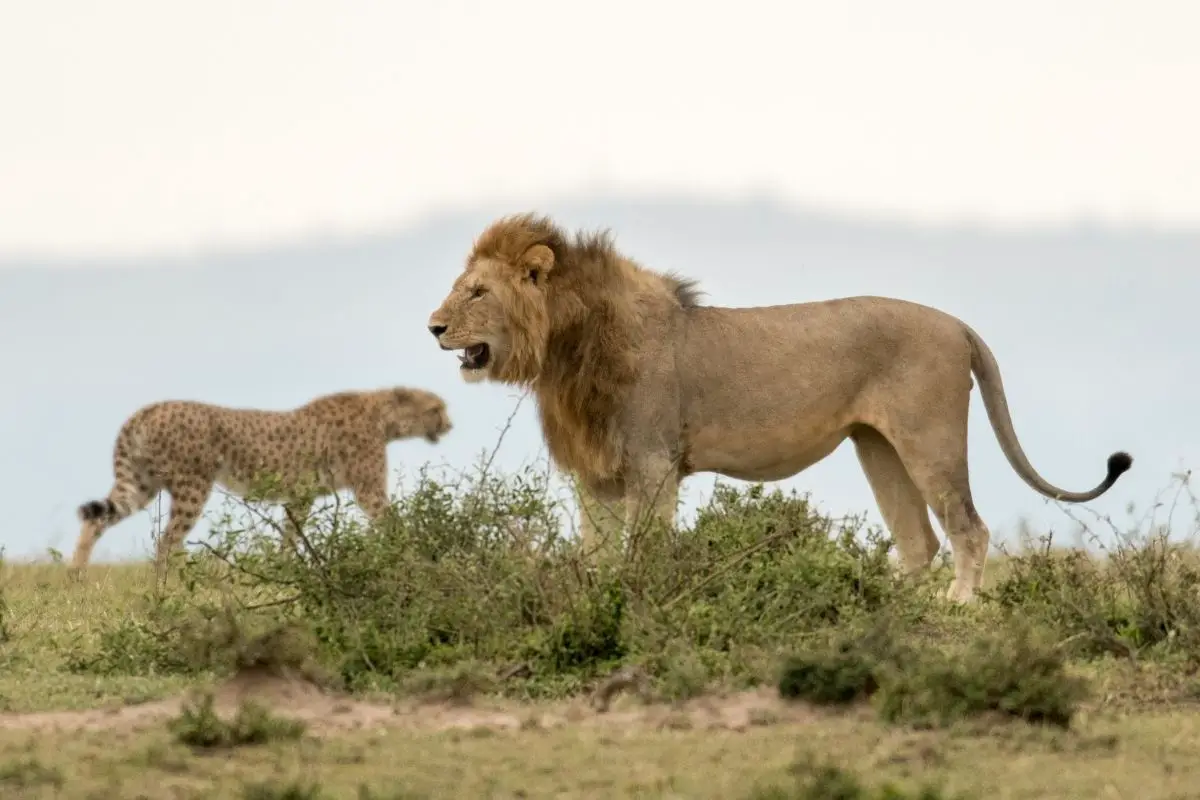
Lions may be the ‘King of the Jungle,’ but they’re actually only the second-largest cat species on the planet.
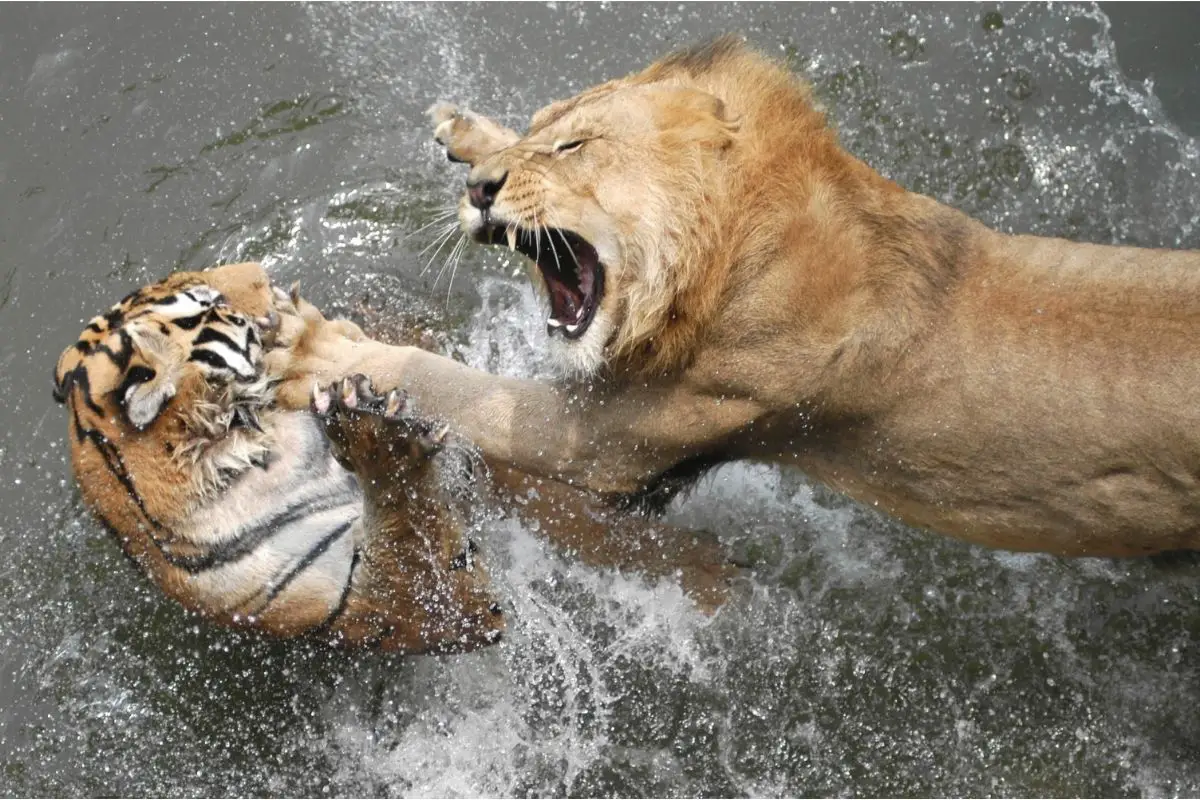
Some subspecies of tiger can grow even larger than the African lion, but there are many other big cat species roaming the savannas and forests in search of food.

Since lions and leopards often share overlapping habitats in Africa, you may be wondering if these magnificent predators ever hunt or eat each other as prey.
It would be ideal to believe that all feline predators can coexist peacefully, but the reality of the natural world is far more complex and competitive.
Do lions eat leopards? The answer involves fascinating ecological principles that govern predator behavior. Read on to discover the truth behind this intriguing question.
Comparing Lions And Leopards: Size Matters
Lions and leopards are closely related species, both belonging to the genus Panthera, along with tigers and jaguars.
They share many common features including retractable claws, exceptional night vision, and a unique larynx structure that allows them to produce powerful roars.
However, there are dramatic differences between African lions (Panthera leo) and African leopards (Panthera pardus).
Size and Weight Comparison
The most significant distinction between these apex predators is their size and weight difference:
African Lions:
- Height: Up to 4 feet at shoulder
- Length: 8-10 feet from nose to tail
- Weight: Males 330-550 lbs, Females 265-395 lbs
- Social structure: Live in prides
African Leopards:
- Height: 2-3 feet at shoulder
- Length: 4.25-6.25 feet from nose to tail
- Weight: Males 60-200 lbs, Females 60-130 lbs
- Social structure: Solitary hunters
This size disparity means that a fully grown adult lion has a significant physical advantage over a leopard in direct confrontation.
However, leopards possess crucial advantages that help them survive in lion territory. Their smaller, more agile build makes them exceptional climbers and masters of stealth, allowing them to access refuges that lions cannot reach.
Do Lions Eat Leopards? The Scientific Answer
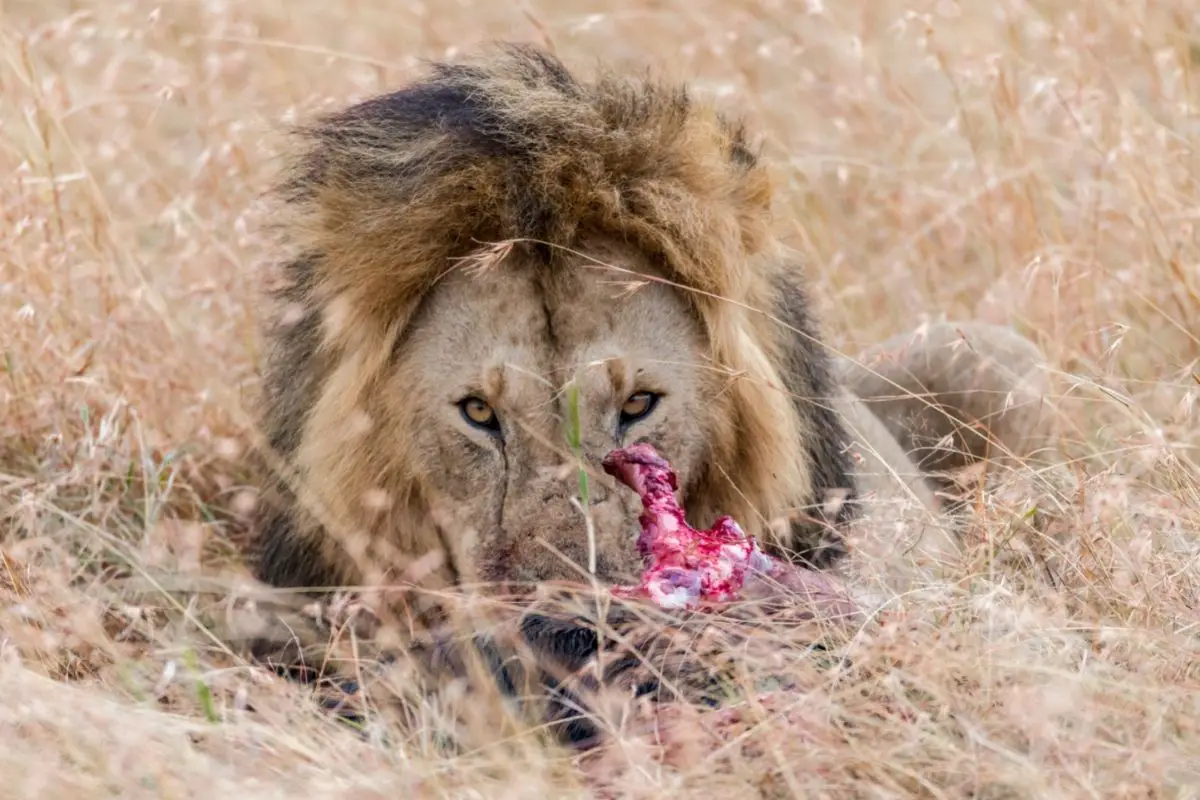
While lions are opportunistic hunters and occasional scavengers, they rarely consume leopards even when the opportunity presents itself.
Even if a lion kills a leopard or discovers a leopard carcass, it will typically abandon the body rather than consume it. This behavior isn’t due to feline solidarity, but rather basic ecological efficiency.
The reason lies in a fundamental ecological principle that governs predator-prey relationships in nature.
The 10% Energy Rule: Why Predators Don’t Eat Predators
Understanding food chains helps explain this phenomenon. Ecosystems are structured in trophic levels:
- Primary producers (plants) – Convert sunlight to energy via photosynthesis
- Primary consumers (herbivores) – Eat plants
- Secondary consumers (carnivores) – Eat herbivores
- Tertiary consumers (apex predators) – Eat other carnivores
The 10% energy rule states that only 10% of energy stored as biomass transfers between trophic levels. This means:
- A zebra only retains 10% of energy from grass it consumes
- A lion only gains 10% of energy stored in the zebra it kills
Since both lions and leopards are apex predators on the same trophic level, a lion would need to consume 10 times more leopard meat to gain the same energy from eating one zebra or buffalo.
This energy inefficiency makes hunting leopards a poor survival strategy for lions, explaining why lions generally avoid eating other predators unless facing extreme starvation.
Do Lions Kill Leopards? Competition and Territory

While lions won’t eat leopards for sustenance, they will definitely attack and kill them when encountered.
Intraguild predation – when predators kill competitors without consuming them – is common in nature. Lions kill leopards to eliminate competition for:
- Territory: Prime hunting grounds
- Prey resources: Overlapping food sources
- Water access: Critical during dry seasons
- Offspring protection: Reducing future competition
Leopard Survival Strategies
Leopards have evolved several strategies to coexist with lions:
- Arboreal lifestyle: Spending significant time in trees
- Nocturnal hunting: Active when lions are less active
- Smaller prey selection: Targeting different species than lions
- Territorial avoidance: Using scent marking to avoid lion territories
- Rapid escape: Superior climbing ability for quick retreats
Lions’ pack hunting behavior makes them particularly dangerous to solitary leopards, who must rely on stealth and escape rather than confrontation.
Are Leopards Frightened Of Lions?
Leopards display cautious respect rather than fear toward lions. This behavioral adaptation represents millions of years of evolutionary pressure.
When protecting cubs or cornered with no escape route, leopards will fight lions with remarkable ferocity. Their speed, agility, and powerful claws make them formidable opponents, even against larger predators.
Fight outcomes depend on several factors:
- Age and health of both animals
- Presence of multiple lions
- Terrain and escape routes available
- Protective motivation (cubs nearby)
- Element of surprise
Modern Conservation Implications
Understanding lion-leopard dynamics is crucial for wildlife conservation in 2025. As human development fragments habitats, these big cats are forced into smaller territories, intensifying competition.
Conservation efforts must account for both species’ spatial requirements and behavioral needs to ensure long-term survival of both lions and leopards across Africa.
Conclusion
Lions and leopards share the same genus but maintain a complex relationship defined by competition rather than cooperation.
While these magnificent predators will attack each other when opportunities arise – primarily to eliminate competition for territory and resources – they rarely consume each other afterward.
The 10% energy rule explains this behavior: the energy gained from eating another apex predator simply isn’t worth the effort expended in hunting and consuming it.
This fascinating example of ecological efficiency demonstrates how energy flow shapes predator behavior in ways that might seem counterintuitive but make perfect sense from a survival perspective.
- Bengal Cat vs Wild Bengal Tiger: Complete Comparison 2025 - October 31, 2025
- Complete Wild Cat Spotting Guide for Hikers 2025 - October 31, 2025
- Lynx vs Bobcat: Complete Field Identification Guide 2025 - October 30, 2025