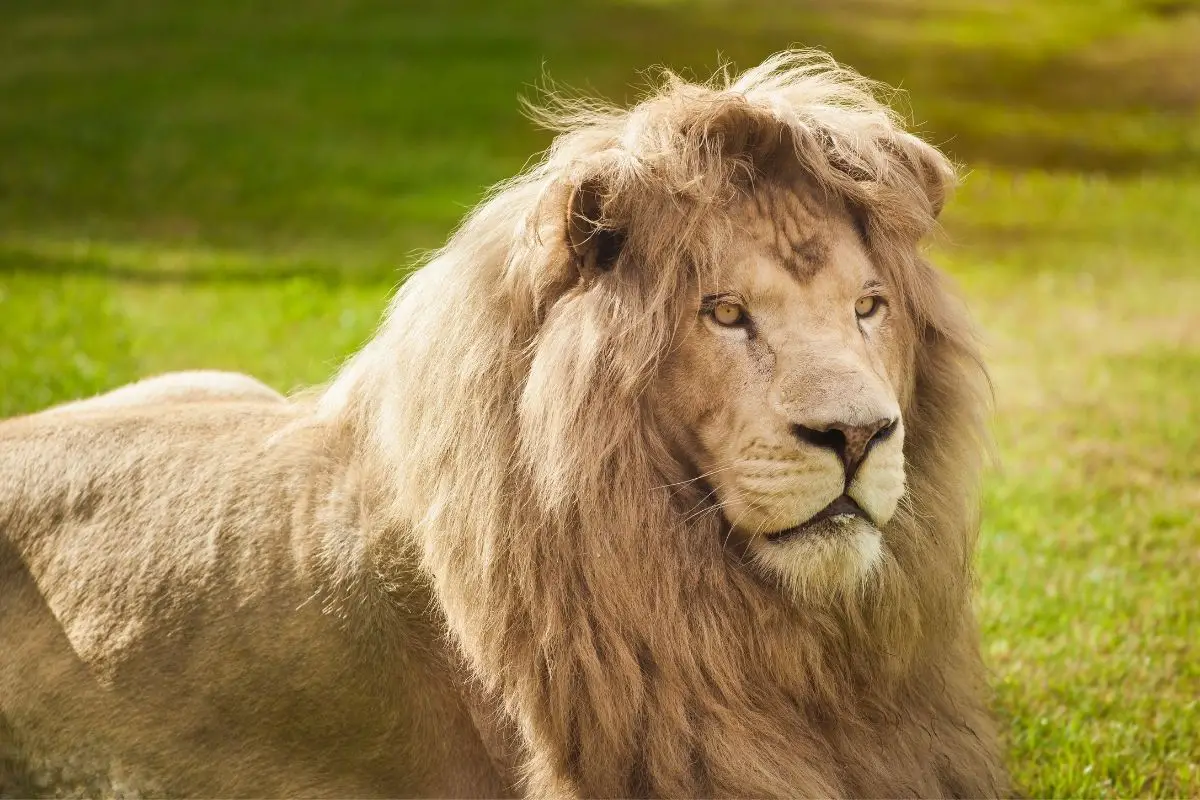
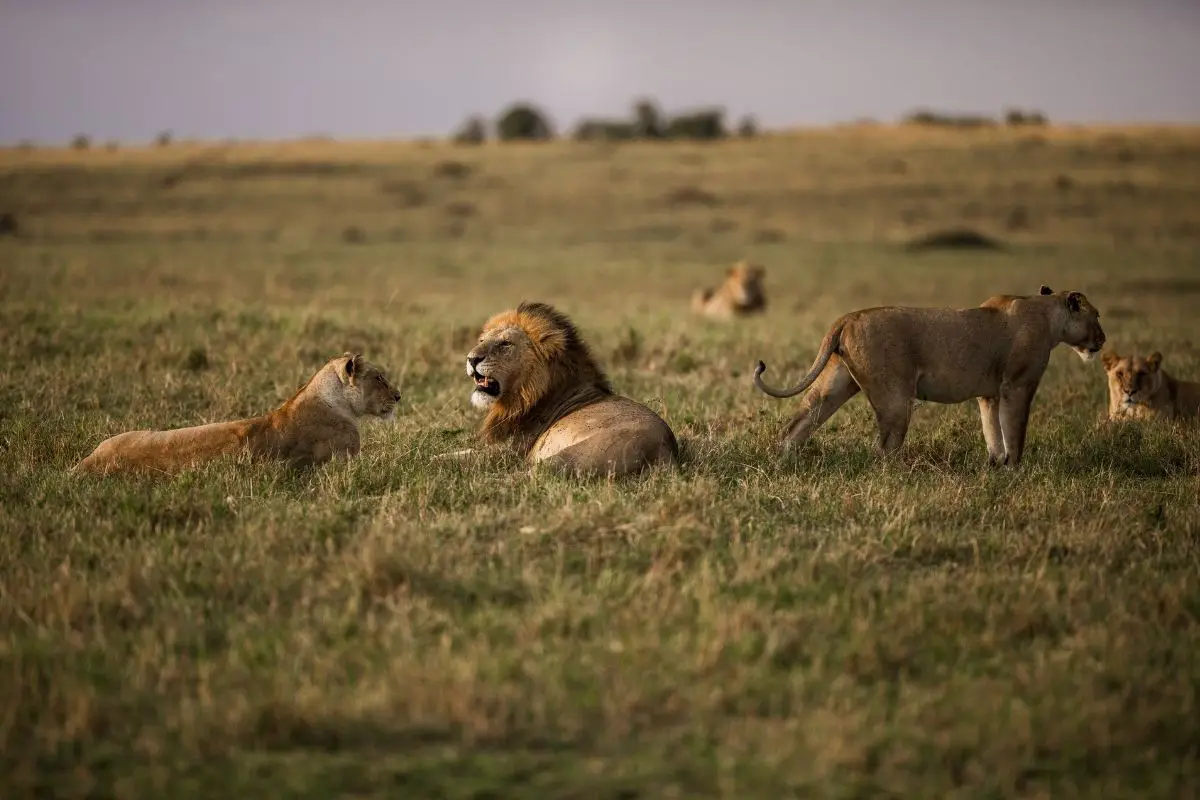
Known as the ‘King of the Jungle,’ lions are among Africa’s most formidable predators, renowned for their incredible hunting prowess and opportunistic feeding behavior.
These apex predators are skilled hunters with exceptional patience and power, capable of taking down prey much larger than themselves.
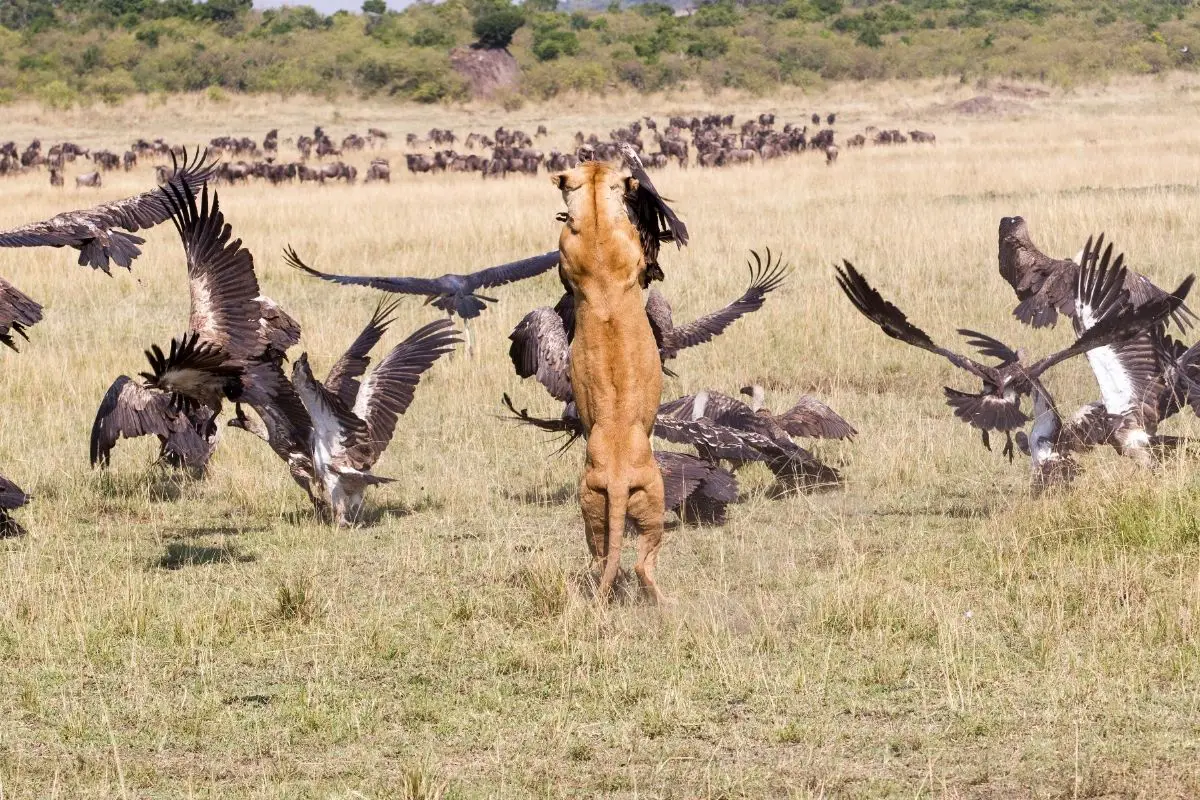
Many people assume there’s nothing a lion won’t eat, and they’re largely correct. Lions are opportunistic feeders who will scavenge from hyenas, vultures, and wild dogs when hunting opportunities are scarce.
However, being willing to eat an animal and being capable of successfully hunting it are two entirely different matters.
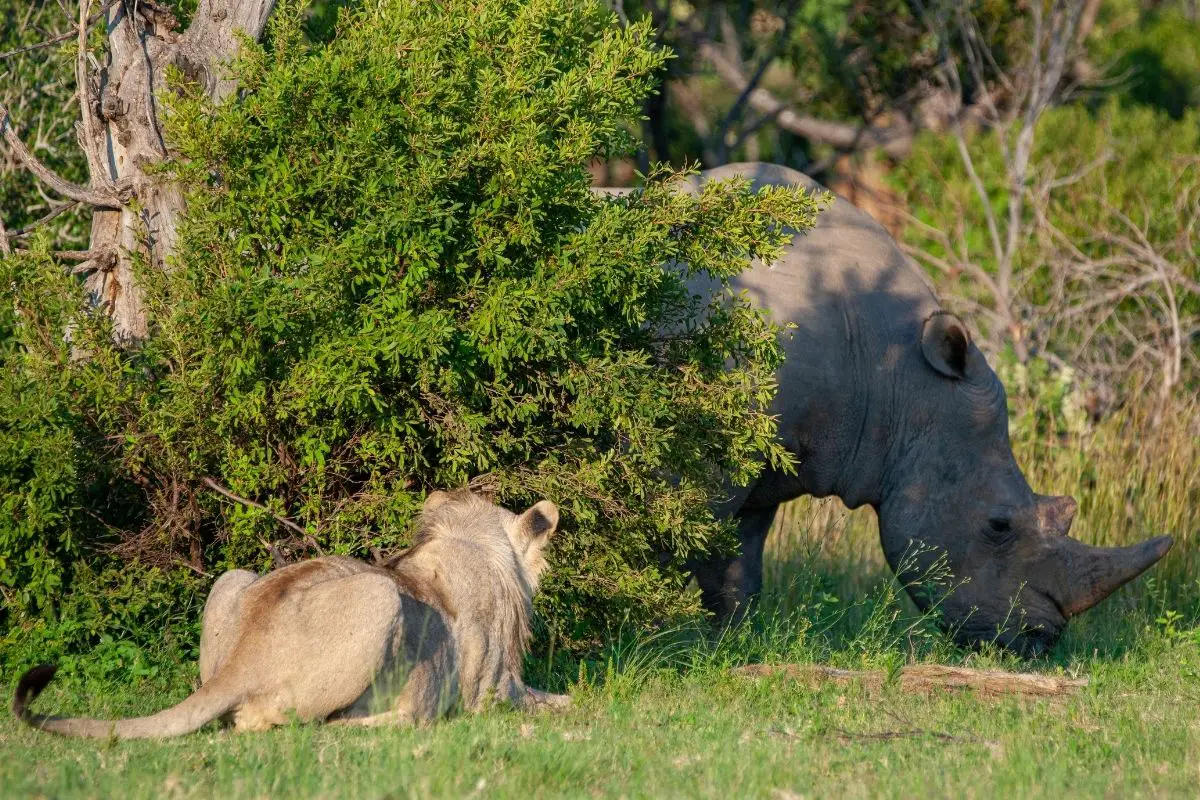
The question remains: can a lion actually take down one of Africa’s most heavily armored giants? While lions are formidable hunters, rhinoceroses are equally impressive in their defensive capabilities.
Let’s explore the fascinating dynamics between these two African powerhouses and uncover the truth about lion-rhino encounters.
Lion Vs Rhino: A David and Goliath Comparison
To understand whether lions can successfully hunt rhinos, we need to examine the physical advantages and disadvantages each species brings to a potential confrontation.
This comparison reveals just how challenging such an encounter would be for both predator and prey.
Size and Weight Differences
The white rhinoceros is the world’s second-largest land mammal, an absolutely massive creature that dwarfs most predators.
White Rhino Dimensions:
• Height: 5-6 feet at the shoulder • Length: 11-13 feet from head to tail • Weight: 3,000-7,000 pounds (1,400-3,200 kg)
In contrast, African lions are significantly smaller, though still impressive predators.
Lion Dimensions:
• Height: 3.5-4 feet at the shoulder • Length: 9-10 feet (including 3-foot tail) • Weight: 330-550 pounds (150-250 kg) • Note: Females are typically 20-25% smaller than males
The size disparity is staggering – a large rhino can weigh 12-15 times more than a lion, making it one of the most challenging prey animals in Africa.
Natural Weapons and Defenses
Rhinoceros Advantages:
White rhinos possess formidable natural armor and weapons. Their two horns are composed of keratin (the same material as human fingernails) but are incredibly strong and sharp.
• Front horn: Can reach up to 79 inches (2 meters) in length • Rear horn: Typically around 22 inches (55 cm) • Skin thickness: Up to 2 inches thick, creating natural armor • Charging speed: Can reach 35 mph (56 km/h)
Lion Advantages:
Lions are expert stalkers with specialized killing techniques. Their hunting strategy relies on stealth, speed, and precise execution.
• Retractable claws: Up to 1.5 inches long • Bite force: 650 PSI (pounds per square inch) • Agility: Superior speed and maneuverability • Hunting technique: Throat grip or neck break to suffocate prey
Do Lions Eat Rhinos?
The short answer is yes – lions will eat rhino meat when available, but obtaining it is the real challenge.
Lions are opportunistic feeders who will readily scavenge rhino carcasses. If a lion pride discovers a dead or dying rhino, they’ll aggressively defend the valuable food source from other scavengers.
A single rhino carcass can provide enough meat to feed an entire pride for several days, making it an incredibly valuable find. Lions will eat virtually any available protein source, and rhino meat is no exception.
However, the critical question remains: can lions actually kill healthy adult rhinos themselves?
Do Lions Hunt Rhinos? The Reality
Lions rarely hunt healthy adult rhinos – and for good reason. Such encounters represent extreme risk with uncertain rewards.
Why Lions Avoid Rhinos:
• Size disadvantage: Even a pride of lions faces a massive size and strength deficit • Armor-like skin: 2-inch thick hide makes it difficult to deliver killing bites • Lethal weapons: A single horn strike can instantly kill a lion • High injury risk: Even successful hunts often result in serious injuries
When Lions Might Target Rhinos:
Lions may attempt to hunt rhinos under specific circumstances:
• Extreme hunger: When other prey is scarce • Vulnerable targets: Young calves, elderly, or sick individuals • Large pride: Multiple lions working together • Opportunistic situations: Separated from the herd
Documented Cases:
While rare, there is video evidence of lions successfully killing rhinos. However, these instances typically involve:
• Compromised rhinos: Often elderly, injured, or weakened individuals • Coordinated pride attacks: Multiple lions working together • Extended battles: Fights lasting hours, not minutes
The Flip Side:
Wildlife researchers have documented numerous cases where rhinos have successfully defended themselves, often with fatal consequences for attacking lions. A charging rhino’s horn can easily pierce a lion’s body, and their massive weight can crush bones.
Preferred Prey:
Lions typically target more manageable prey like zebras, antelopes, and buffalo. These animals provide adequate nutrition without the extreme risks associated with rhino hunting.
The Bottom Line
Lions are undoubtedly among nature’s most skilled predators, equipped with retractable claws, powerful jaws, and exceptional hunting instincts. Under extreme circumstances, they can kill rhinos, but success is never guaranteed.
The African white rhinoceros commands respect as the second-largest land mammal on Earth. Their combination of size, armor-like skin, and devastating horns makes them one of the most challenging prey animals in the animal kingdom.
Key Takeaways:
• Lions will eat rhino meat when available but rarely hunt healthy adults • Most documented lion-rhino kills involve weakened or young rhinos • Rhinos successfully defend themselves in many encounters • Lions prefer easier prey when available
This dynamic perfectly illustrates nature’s balance – even apex predators must carefully choose their battles to survive in the wild.
Hi, my name is Joe Edwards and I am fascinated by the world of big cats. It all started when my family and I visited a safari park when I was six years old. I begged my parents to get me a stuffed lion as a memento, and later a book about big cats for Christmas.
Now, over 20 years later, I still can’t get enough of them!